
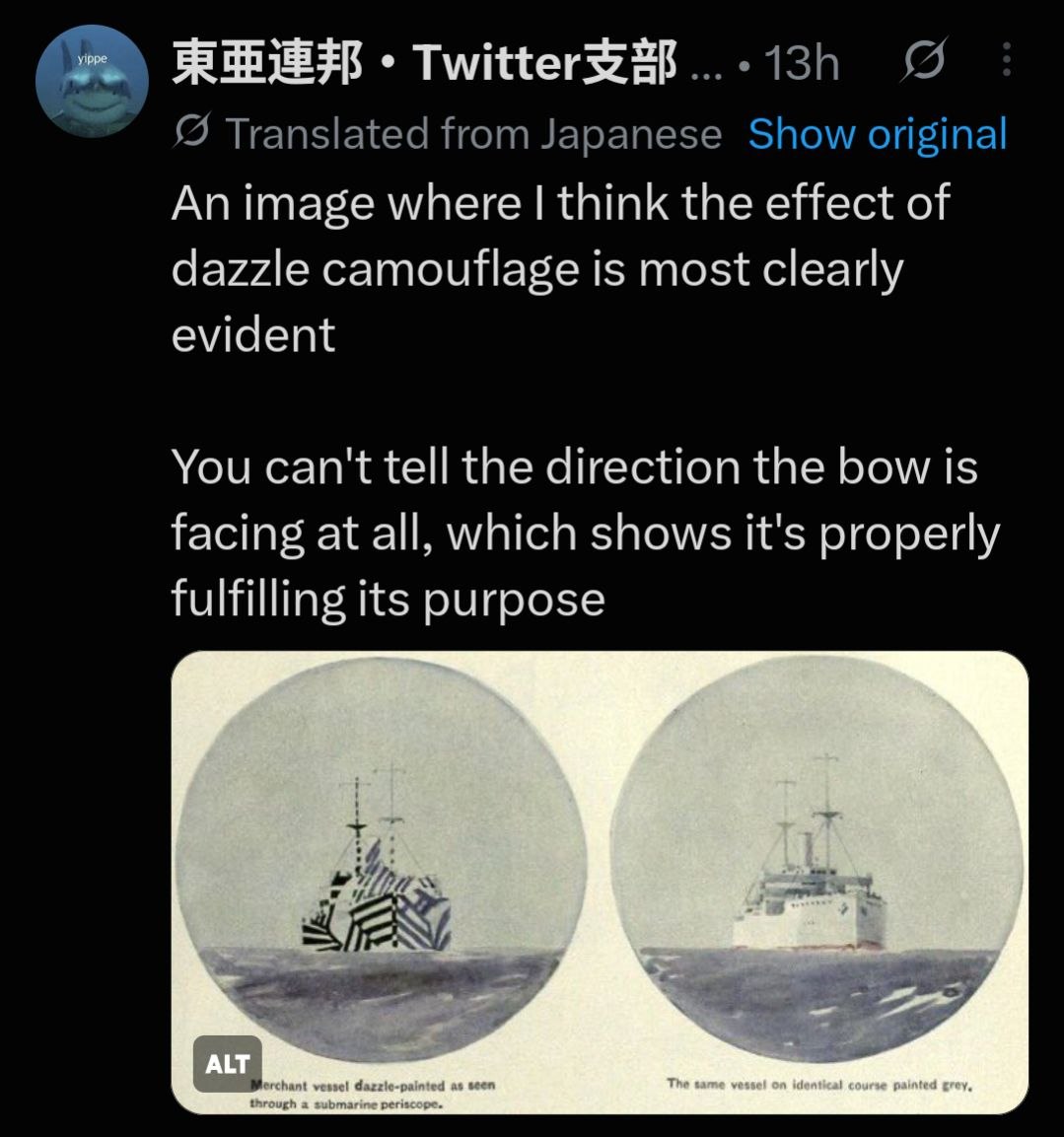
東亜連邦・Twitter支部: “An image where I think the effect of dazzle camouflage is most clearly evident. You can’t tell the direction the bow is facing at all, which shows it’s properly fulfilling its purpose.”
Top image: “Merchant vessel dazzle-painted as seen through a submarine periscope.”
Bottom image: “The same vessel on identical course painted grey.”
This is the best demonstration of dazzle camouflage ever put in a tweet. Same ship. Same course. Same periscope. The grey one: you know exactly where it’s going, you can line up the torpedo shot in your sleep. The dazzle one: zigzagging black-and-white shapes that break the hull into fragments — you genuinely cannot tell which end is the bow. It looks like a modern art piece that happens to be moving.
Dazzle wasn’t about hiding ships — it was about confusing torpedo aim. Submarine captains needed range, speed, and direction; dazzle deliberately destroyed the last two. It didn’t make ships invisible, it made them unaimable. A torpedo fired at the wrong angle misses by enough to matter.
The British Navy commissioned artists — actual painters — to design the patterns. Norman Wilkinson, a Royal Academy painter, invented it in 1917. Artists beat the U-boats with paint. The ultimate flex: an art school project that changed naval warfare.
And a century later, it still works on the eye. Look at that top image again. Where is the bow? Exactly.

0 Comments